World models run on action data - and games are where it lives
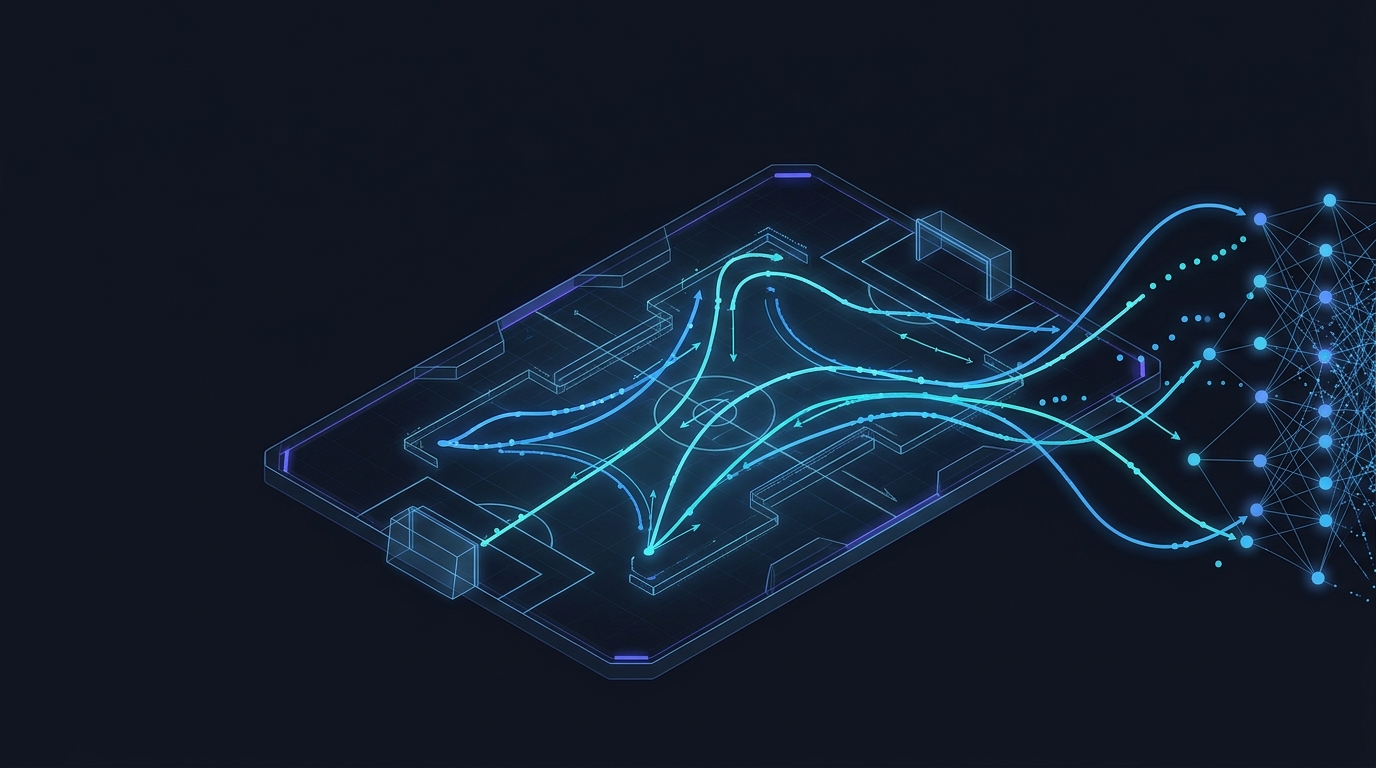
The shift from language to action
For years the frontier of AI has been language. The next frontier is action. A new class of models - world models - is being built to understand not what to say, but what happens next: how an environment changes when an agent moves, aims, interacts, or makes a decision. These are the models meant to drive robots, agents, and autonomous systems, and the labs building them have reached an important conclusion. The bottleneck is not model size or compute. It is data that captures cause and effect - the record of an action and its consequence in a 3D world.
That realization has set off a race, with serious capital flowing into companies whose core asset is the right kind of gameplay data. Why games? Because a game is a physics-approximating, interactive, fully instrumented world where millions of people take purposeful actions every second - and where, unlike the real world, every one of those actions can be recorded exactly.
Why video is not enough
Most "gameplay data" is video: screen recordings and clips. Video is useful, but it hides the very thing a world model needs - the action. A model watching a clip has to guess what the player did to produce each frame, and that guess is expensive and lossy.
What world models actually want is the structured record underneath the pixels: where every player was, where they were looking, what they did, and what resulted - frame by frame, with the action already labeled. That data is not lying around on the internet. It exists only at the source, inside the game server, at the moment play happens.
What GetGud captures
This is exactly what GetGud was built to capture. Our SDK integrates directly into a game and turns every match into a complete, replayable model of what happened: high-frequency player data - position and orientation per tick - together with the core gameplay actions of spawn, movement, attack, damage, death, healing, and any custom in-game event a title chooses to record.
Because it is captured server-side, it is ground truth, not inference. Because it is normalized into one consistent structure, the same schema describes a shooter, a MOBA, a survival game, or anything else, across engines and platforms. And because a full match can be reconstructed and replayed in 3D from the stream alone, the data is provably complete: every position, every look direction, every action, on a single timeline.
In other words, GetGud produces the state, action, and event signal that world models are built on - natively, at the source, across any game.
The same data, a new purpose
We built this to help studios understand their games: to replay sessions, analyze behavior, balance mechanics, and detect cheating and toxicity with complete gameplay observability. But the structure that makes gameplay legible to a studio is the same structure that makes it legible to a model. A clean, labeled, multi-agent record of how humans move, act, and respond in a 3D world is precisely the fuel an embodied AI system needs to learn how the world behaves.
And it generalizes in a way scraped data cannot. Connect a new title and you get the same normalized action data for it immediately. For a lab assembling action-labeled experience across many games, that is the difference between building bespoke pipelines title by title and pointing a single integration at an entire library.
Where this goes
The path from a game to a robot is shorter than it looks. An agent learning to move, look, and act with intent in a virtual 3D space is learning something that transfers - to navigation, to viewpoint control, to multi-agent interaction, to the timing of decisions under pressure. The teams furthest ahead in world models already treat games as the training ground for physical intelligence.
That makes the data studios generate every day newly valuable, and it makes the layer that captures it - cleanly, at the source, in a form a model can actually use - a piece of infrastructure the next wave of AI will depend on.
If you are building world models or embodied AI and need structured, action-labeled gameplay data, or you run a game and want to understand what your own data is worth, we should talk.